


Your tummy tuck surgery day in Turkey begins with early hospital arrival for final checks and markings, proceeds under general anaesthesia with expert surgical technique, and concludes with an overnight stay in a private recovery suite where nurses manage drains, pain relief, and your first supported steps — all coordinated seamlessly by Clinic Wise.
Tummy Tuck Surgery Day in Turkey: Step-by-Step Guide
You have booked your procedure. You have packed your compression garments and loose clothing. You have read every tummy tuck guide available. Now, the only thing left is the day itself — and knowing exactly what unfolds, hour by hour, changes everything. This walkthrough takes you through a typical tummy tuck surgery day at Clinic Wise partner hospitals in Turkey, from the moment you step through the doors to the moment you settle into your first night of recovery. No surprises. Just clarity.
Before You Arrive: The Night Before and Morning Of
Your tummy tuck surgery day actually starts the evening prior. You will receive a clear fasting window — usually nothing to eat or drink after midnight. This is standard tummy tuck preparation for general anaesthesia safety. A member of the Clinic Wise team will confirm your pickup time, usually between 6:30 and 7:00 AM, so you arrive at the hospital relaxed and unhurried.
Morning of surgery, shower with the antibacterial soap provided. Do not apply lotions, deodorants, or makeup. Wear loose, button-front or zip-front clothing — anything that does not need to go over your head. Leave valuables at your accommodation. Your patient coordinator will meet you at the hospital entrance and stay with you through admissions.
Key Takeaway: The night-before fast and morning shower are non-negotiable safety steps. Your coordinator handles logistics so you can focus entirely on the procedure ahead.
Admissions and Pre-Op: 7:30 AM – 9:00 AM
Upon arrival, you are escorted to a private pre-op room — not a crowded waiting area. A nurse takes vital signs, reviews your medical history one final time, and places an IV cannula for fluids and medications. You will change into a surgical gown and compression stockings to support circulation.
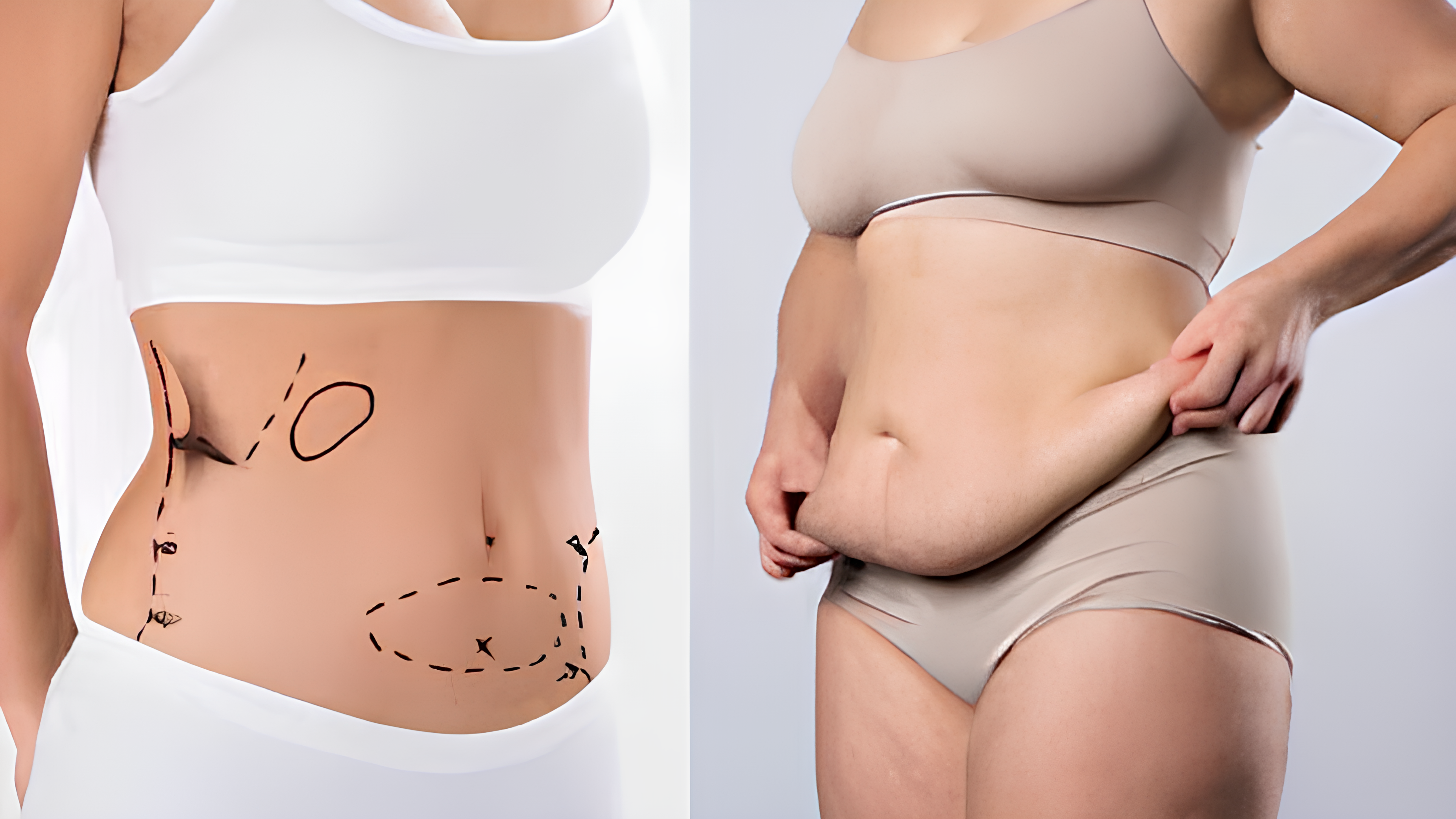
Then comes a pivotal moment: your surgeon visits to perform the tummy tuck preparation markings. Standing upright, you will see them draw precise lines across your lower abdomen, often extending hip to hip, with additional markings around the navel and sometimes the upper abdomen if extended work is planned. These are not guesses. They are the surgical map, drawn on you, for you, accounting for your anatomy, your goals, and the natural contours of your body.
The anaesthetist also visits. They explain the tummy tuck anaesthesia plan — typically a balanced general anaesthetic with a regional block (such as a TAP block) for post-operative comfort. You can ask any last questions. Many patients describe this moment as surprisingly calm; the unknowns have been answered, the plan is set, and the team around you is entirely focused on you.
Into the Operating Room: 9:00 AM – 1:00 PM (Approximate)
When it is time, you walk — or are wheeled — into the tummy tuck operating room. The room is bright, temperature-controlled, and humming with quiet purpose. The team introduces themselves by name and role. Monitors are attached: blood pressure, heart rate, oxygen saturation. The anaesthetist asks you to breathe deeply through a mask. The next thing you know, you are waking up in recovery.
While you sleep, the procedure unfolds in stages. First, the horizontal incision along the bikini line, designed to sit low and hidden. The skin and fat are lifted from the abdominal wall, exposing the rectus muscles. If those muscles have separated — common after pregnancy or weight fluctuation — they are sutured together (plication) to restore core strength and a flatter profile. Excess skin and fat are trimmed. The navel is freed, repositioned through a new opening, and sutured naturally. Liposuction may refine the flanks. Drains are placed to prevent fluid buildup. Incisions are closed in meticulous layers.
The entire tummy tuck surgery timeline typically spans two to four hours. You are never alone; the anaesthetist monitors every breath, every heartbeat, every millilitre of fluid. The surgical nurse counts instruments and sponges aloud at start and finish. Safety protocols are not checkboxes here — they are culture.
Key Takeaway: The operating room is calm, highly coordinated, and entirely centred on your safety. You will not feel or remember the procedure — only the result.
Wake-Up and Recovery Room: 1:00 PM – 3:00 PM
You surface in the post-anaesthesia care unit (PACU). Warm blankets. Oxygen via nasal cannula. A nurse at your side tracking pain scores, nausea, blood pressure, drain output. The compression garment you brought — or one provided by the hospital — is already in place, supporting your abdomen and reducing swelling.
Pain is managed proactively. The regional block placed during surgery dulls sensation for the first 12–24 hours. IV medications top it up on a schedule, not on demand. You will feel pressure and tightness, not sharp pain. Nausea medication is given preventatively. Most patients are pleasantly surprised by how comfortable they feel.
Once fully alert — usually within 90 minutes — you are transferred to your private inpatient room. This is not a shared ward. It is a hotel-grade suite with an en-suite bathroom, adjustable bed, blackout blinds, and space for a companion to stay overnight. Your patient coordinator checks in. Your surgeon visits before evening rounds to confirm everything went to plan.
First Steps and Evening Routine: 3:00 PM – 10:00 PM
Within a few hours of waking, a nurse helps you sit at the edge of the bed. Then stand. Then take a few shuffling steps, bent slightly forward at the waist — this protects the repair. You will not stand tall yet. That comes later. These early walks are essential: they prevent blood clots, stimulate bowel function, and reset your body’s sense of movement.
Dinner is light — soup, yogurt, herbal tea. Hydration is encouraged. Drains are measured and recorded. You will learn to read the output yourself before discharge. Pain medication transitions from IV to oral. By evening, most patients are dozing between nurse checks, surprised by how manageable the day has been.
TL;DR — Your Surgery Day at a Glance
- Early morning: Hospital arrival, vitals, IV, surgical markings, anaesthetist consult
- Mid-morning to early afternoon: General anaesthesia, procedure (2–4 hours), meticulous layered closure
- Afternoon: Wake-up in PACU, pain managed, compression garment on, transfer to private suite
- Evening: First supported walks, light dinner, drain monitoring, oral pain meds, rest
- Overnight: Nursing checks, assisted bathroom trips, elevated sleep, companion welcome
The First Night: 10:00 PM – 7:00 AM
This is where tummy tuck first night recovery sets the tone. You sleep with the head of the bed elevated (30–45 degrees) and knees slightly bent — pillows under thighs help. This position reduces tension on the incision and makes breathing easier. A call button is always within reach.
Nurses check on you every two to four hours: drain output, pain level, temperature, wound sites. They help you to the bathroom. They adjust your garment if it shifts. Your companion can sleep on a provided sofa bed. Many patients report the night passes faster than expected — a mix of exhaustion, medication, and the profound relief that the surgery is done.
You will not sleep perfectly. That is normal. You will wake aware of your abdomen in a new way — tight, foreign, held. That awareness is temporary. By morning, the drains often show decreasing output, pain scores drop, and the team begins discussing discharge criteria.
Key Takeaway: The first night is supported, monitored, and designed for safety. You are never alone, and every discomfort has a protocol.
Morning After: Discharge Readiness
Around 7:00 AM, the surgical team reviews your vitals, drain output (usually under 30–40 mL per drain over 24 hours), pain control on oral medication, and ability to walk short distances independently. If all boxes are ticked — and they usually are — discharge is approved.
You receive a detailed discharge packet: medication schedule, drain care instructions, wound care guidelines, activity progression, red-flag symptoms, and direct contact numbers for your surgeon and Clinic Wise coordinator. A follow-up appointment is scheduled, typically within 48 hours. Your coordinator arranges transport to your recovery accommodation — never a taxi, always a private vehicle with space to recline.
Why This Day Runs Differently in Turkey
Patients who have had surgery in the UK, EU, or USA often remark on the difference. The tummy tuck surgery day in Turkey at Clinic Wise partner hospitals is defined by three things: time, attention, and integration.
- Time: Your surgeon is not rushing between three theatres. They are in your room before and after. The anaesthetist sits with you pre-op. The nurses have patient ratios that allow genuine monitoring.
- Attention: Every team member knows you are an international patient. Communication is in English. Cultural sensitivity is standard. Your comfort — physical and emotional — is treated as clinical priority.
- Integration: Clinic Wise coordinates the entire arc: hospital, hotel, transfers, follow-ups, lymphatic massage scheduling, compression garment fittings. You do not manage logistics. You manage healing.
This is not medical tourism as a transaction. It is medical tourism as a cared-for experience.
Preparing Mentally: What Patients Wish They Knew
Beyond the clinical timeline, a few realities make the day smoother:
- You will feel vulnerable. That is not weakness — it is surgery. Accept the care offered.
- The garment feels tight. It is supposed to. It shapes your result and reduces complications.
- Drains are temporary. Most come out at the first or second follow-up. They are not permanent fixtures.
- Walking bent over is not forever. Posture returns gradually over the first two weeks.
- Your coordinator is your advocate. Message them at 3 AM if something feels wrong. That is what they are there for.
Key Takeaway: The physical protocol is precise. The emotional experience is personal. Both are fully supported at Clinic Wise.
Your Tummy Tuck Surgery Day: The Start of Something
By the time you settle into your recovery accommodation that first afternoon post-discharge, the tummy tuck surgery day is behind you. Ahead lies the recovery journey — lymphatic massage sessions, scar care routines, gradual return to movement, and the slow, weekly reveal of your new contour. But the hardest day, the biggest unknown, the day you built up in your mind for months — it is done. And it went exactly as planned.
If you are still in the research phase, exploring whether this path fits your life, the next step is a conversation. No pressure. No obligation. Just answers from people who have guided hundreds of patients through this exact day.
Book Your Free ConsultationYou can also browse real patient transformations in our Before & After gallery, read authentic experiences on our patient stories page, or download the full patient journey guide for a printable roadmap from enquiry to aftercare.
Your surgery day has a script. You have just read it. Now write the ending you want.
Frequently Asked Questions
What time should I arrive at the hospital on my tummy tuck surgery day?
Most patients arrive early morning, typically between 7:00 and 8:00 AM, allowing time for final consultations, consent forms, and pre-operative preparations before the procedure begins.
Will I be awake during any part of the tummy tuck procedure?
No, a tummy tuck is performed under general anaesthesia administered by a specialist anaesthetist. You will be fully asleep and comfortable throughout the entire surgical procedure.
How long does the actual tummy tuck surgery take?
The procedure typically takes between two and four hours depending on the complexity, whether muscle repair is needed, and if liposuction is combined with the abdominoplasty.
Can I go back to my hotel the same day as my tummy tuck?
Most patients stay overnight in the hospital for monitoring and pain management. Same-day discharge is uncommon for a full tummy tuck; your surgeon will confirm the plan during your consultation.
What happens during the first night after tummy tuck surgery?
You will rest in a private recovery room with nursing support, pain medication on schedule, drains managed by staff, and assistance moving safely. Most patients sleep elevated and take short, supported walks.

Weight Loss and Tummy Tuck Surgery Examine the impact of stomach tuck surgery on body contouring and weight loss. Discover Read more
What is Tummy Tuck? Abdominoplasty, a tummy tuck, is an aesthetic surgical surgery used to enhance the physical appearance and Read more

Maintaining smooth, supple skin on your face and body might become more difficult as you age, even with proactive regular Read more
Add a Comment