


Tummy tuck J-Plasma aftercare requires protecting two healing layers: the surgical repair and the thermal skin tightening. Combined recovery adds 1–2 weeks, demands specialised compression, and includes a secondary swelling peak at weeks 2–3. Following protocol preserves your skin tightening investment.
Tummy Tuck J-Plasma Aftercare: How Recovery Shapes Your Final Result
You’ve researched the procedure. You understand what tummy tuck J-Plasma aftercare promises — a flatter abdomen and genuinely tighter skin. But here’s what most guides won’t tell you: your result isn’t decided in the operating theatre. It’s decided in the six weeks after. The combination of muscle repair and helium plasma energy creates a recovery landscape that’s fundamentally different from either procedure alone. Miss a protocol, and you risk compromising the very skin tightening you invested in. Follow it, and you unlock a result that keeps improving for a year.
At Clinic Wise, we’ve guided hundreds of patients through this exact journey. The patterns are clear. The patients who thrive aren’t the ones who “tough it out” — they’re the ones who understand why each instruction exists. Let’s walk through it together.
Why Combined Tummy Tuck J-Plasma Aftercare Differs From Standard Recovery
A traditional tummy tuck heals from the outside in: skin edges knit, muscles settle, swelling drains. J-Plasma heals from the inside out: helium plasma creates controlled thermal injury beneath the skin, triggering collagen contraction and neocollagenesis. When you combine them, you’re managing two distinct healing timelines that interact in specific ways.
The muscle repair needs compression and limited flexion. The J-Plasma zones need space — no direct pressure on the treated subdermal layer for the first critical weeks. Standard tummy tuck garments press everywhere equally. That’s a problem.
There’s also the swelling conversation. Tummy tuck swelling peaks at week one, then declines steadily. J-Plasma introduces a second swelling peak around weeks two to three as the thermal response kicks in. Patients who don’t expect this often panic — or worse, stop wearing their garment because it “feels tighter.” It’s not tighter. Your tissue is actively remodelling.
Finally, the incision map changes. Beyond your low horizontal scar, you’ll have three to five tiny J-Plasma port sites (usually near the flanks and lower abdomen). Each needs individual attention — antibiotic ointment, non-stick dressings, and protection from garment elastic.
Key Takeaway: Combined recovery isn’t “longer tummy tuck recovery” — it’s a different physiological event. Your aftercare protocol must protect the muscle repair and create space for thermal remodelling simultaneously.
The First 72 Hours: Protecting Your J-Plasma Investment
The moment you wake up, two things are happening. Your repaired muscles are knitting under tension. Your J-Plasma treated zones are beginning a collagen cascade that will continue for months. The first 72 hours set the trajectory for both.
Positioning Is Everything
You’ll maintain a slight jackknife position — hips flexed 30–45 degrees, knees supported — for the first five to seven days. This isn’t just comfort. It offloads the muscle repair and prevents tension on the J-Plasma treated skin envelope. Sleeping flat too early pulls on both layers simultaneously.
Drains & Port Sites: Different Rules
Your tummy tuck drains (usually two) follow standard protocol: measure output, strip tubing, remove at 30ml/24hrs. Your J-Plasma port sites? No drains. They’re dressed with antibiotic ointment and non-stick pads, changed twice daily. Never let garment elastic sit directly on a port site. Your Clinic Wise nurse will show you how to pad the garment edge with gauze rolls.
Heat Management
J-Plasma generates internal warmth for 48–72 hours post-op. Patients describe a “deep sunburn” sensation beneath the skin. A rechargeable handheld fan (pack one!) aimed at the abdomen through the garment provides immense relief without disturbing the compression. Ice packs? Never directly on J-Plasma zones. The thermal injury is controlled — adding external cold disrupts the signalling cascade.
Medication Nuance
Standard tummy tuck pain protocol covers the muscle layer. But J-Plasma creates a distinct neuropathic component — tingling, zinging, hypersensitivity — that peaks around day three. Your prescription will include a nerve-calming agent (often gabapentin or pregabalin) alongside standard analgesics. Take it on schedule, not as-needed. Staying ahead of nerve pain prevents the guarding posture that strains your repair.
Key Takeaway: The first 72 hours are about creating the right environment for two healing processes: mechanical (muscle/skin closure) and thermal (collagen remodelling). Positioning, heat management, and nerve pain control are your three levers.
Weeks 1–2: Compression, Movement & Skin Tightening Protocols
This is where most patients unintentionally sabotage their J-Plasma results. The garment fits differently now. The swelling pattern shifts. The movement rules feel counterintuitive.
The Garment Conversation
Your Stage 1 garment (provided by Clinic Wise) looks like a standard tummy tuck binder — but the engineering is different. Key features:
- Port site windows: Pre-cut openings with soft bonded edges aligned to your J-Plasma entry points
- Zoned compression: Firmer over the muscle repair, lighter over the flanks and upper abdomen where thermal tightening occurs
- Adjustable shoulder straps: Prevents the garment sliding down and compressing port sites
Wear it 23/7 for the first 14 days. The one hour off? For showering and garment washing (hand wash, air dry — heat degrades the compression memory). If your garment feels “too tight” around week two, don’t size up. That’s the secondary swelling peak. Contact your coordinator — they’ll guide a strap adjustment, not a size change.
Movement: The “No Crunch” Rule
No abdominal flexion. None. Not for sitting up, not for reaching, not for “just a little.” Every crunch motion pulls the repaired muscle fascia and stretches the freshly heated dermal matrix. Both hate it.
Instead: log-roll to sit. Use your arms to push up. Keep your torso neutral. Walk with hands lightly clasped behind your head — this naturally opens the chest and prevents the protective hunch that strains the lower repair.
Lymphatic Massage: Timing Matters
Standard tummy tuck patients start manual lymphatic drainage (MLD) at day 5–7. With J-Plasma, we wait until day 10–14. Why? The thermal zones are still in their acute inflammatory phase. Early massage can disperse the very signalling molecules driving collagen production. Your Clinic Wise therapist knows the modified protocol: light strokes above and below the treated zones, never directly over them, until week three.
Nutrition for Dual Healing
Protein targets increase: 1.6–2g per kg body weight daily. Collagen peptides (15g daily) support both fascial and dermal remodelling. Vitamin C (500mg twice daily) is non-negotiable — it’s the rate-limiter for collagen cross-linking. Zinc, copper, and manganese (in a quality multimineral) complete the enzymatic picture. Hydration: 3–4 litres daily. The thermal injury increases insensible water loss.
Key Takeaway: Weeks 1–2 are about respecting the garment’s zoned engineering, eliminating abdominal flexion entirely, delaying lymphatic work over thermal zones, and feeding two distinct healing processes with targeted nutrition.
Weeks 3–6: The Remodelling Phase
This is where the magic happens — and where patients get impatient. The incisions are closed. The drains are out. You look “done” in clothes. But beneath the surface, your J-Plasma zones are in peak collagen synthesis mode.
The Secondary Swelling Peak
Around week three, your abdomen may feel fuller, tighter, almost “puffy” in the flanks and upper abdomen. This is good. It means fibroblasts are flooding the matrix, laying down new collagen. The swelling is firm, not pitting. It doesn’t respond to diuretics (don’t try). It responds to time, gentle movement, and continued compression.
Stage 2 garment transition happens here — usually week four. Lighter compression, no port site windows needed (sites are healed), but still zoned for the upper abdomen. Your coordinator schedules this based on your healing photos, not a calendar.
Scar & Port Site Maturation
Your low horizontal scar and 3–5 port sites enter the proliferative phase. Red, raised, possibly itchy — all normal. Silicone therapy begins now: sheets for the main scar, gel for port sites. 12 hours on, 12 hours off. Consistency matters more than brand. UV protection is non-negotiable for 12 months — a single sunburn can permanently darken these fresh scars.
Reintroducing Movement
Week 3: gentle thoracic rotation (seated, arms crossed). Week 4: supported hip hinges — think “dead bug” variations, not planks. Week 5: bodyweight glute bridges. Week 6: cleared for progressive core loading if your surgeon confirms fascial integrity via ultrasound. This staged return protects the repair while allowing the tightening skin to adapt to movement.
The “Tightness” Sensation
Many patients describe a sensation of “shrink-wrapped” skin across the upper abdomen and flanks. It can feel restrictive, especially with deep breaths. This is the collagen contracting. It peaks at week 4–6, then gradually softens over months. Don’t stretch aggressively to “loosen” it — the tissue needs to shorten under load. Gentle diaphragmatic breathing within comfort is the right approach.
Key Takeaway: Weeks 3–6 are the active remodelling window. Expect firm secondary swelling. Transition garments on clinical guidance, not calendar. Start silicone therapy. Reintroduce movement in stages. Trust the tightness — it’s the tightening working.
Long-Term Care: Protecting Your Investment Beyond Six Months
At six months, you’re “healed.” At twelve months, you’re “finished.” The collagen remodelling cycle completes around the one-year mark. What you do between month six and month twelve shapes the decade.
Maintenance Compression
Most patients wear a light, high-waisted compression short (like premium shapewear) during long flights, intense workouts, or menstrual cycles for the first year. It’s not medical-grade — it’s mechanical support for the still-maturing dermal matrix during stress events.
Skin Quality Protocols
Topical retinoids (prescription strength) can resume at month three, but only on the upper abdomen and flanks — never the fresh scar. Vitamin C serum daily. Quarterly professional treatments (radiofrequency microneedling, non-ablative fractional laser) can further enhance skin quality, but only after surgeon clearance at month six.
Weight Stability
Significant weight fluctuation (>5kg) after combined procedures stretches the neocollagenesis before it’s fully cross-linked. The skin tightening has “memory” — but it’s not infinite. Patients who maintain stable weight report results lasting 10+ years. Those who cycle see laxity return faster than after tummy tuck alone.
Annual Check-Ins
Clinic Wise includes virtual annual reviews for five years. You send photos; we assess scar maturity, contour stability, and skin quality. Early intervention (a single Morpheus8 session, a garment refresher) prevents small changes becoming revisions. It’s part of the relationship — not an upsell.
Key Takeaway: Your tummy tuck J-Plasma result matures over 12 months. Maintenance compression during stress, targeted skin quality care, weight stability, and annual surgeon reviews protect the investment for the long term.
TL;DR — Tummy Tuck J-Plasma Aftercare Essentials
- Combined recovery = two healing timelines (mechanical + thermal) requiring a specialised garment with port site windows and zoned compression
Frequently Asked Questions
How long does tummy tuck J-Plasma recovery take compared to tummy tuck alone?
The initial healing phase adds about one to two weeks because J-Plasma creates controlled thermal injury that needs careful protection. Most patients return to desk work at two to three weeks and full activity by six to eight weeks, though swelling continues refining for months.
Can I wear a regular compression garment after tummy tuck with J-Plasma?
No — your surgeon will prescribe a specific garment designed for combined procedures. It must accommodate J-Plasma entry points without pressing directly on treated zones while still supporting the tummy tuck repair. Fit adjustments happen at each follow-up.
When can I start scar treatment after tummy tuck J-Plasma?
Silicone sheets or gels typically begin once all incisions and J-Plasma port sites are fully closed and scab-free — usually around week three to four. Your Clinic Wise coordinator will confirm the exact timing based on your healing photos.
Does J-Plasma change the tummy tuck swelling timeline?
Yes. The thermal energy creates a secondary swelling peak around weeks two to three that wouldn’t occur with tummy tuck alone. This is normal and signals collagen remodelling. Lymphatic massage helps manage it.
What supplies should I prepare before tummy tuck J-Plasma surgery?
Beyond standard tummy tuck supplies, add loose high-waisted clothing that doesn’t touch J-Plasma port sites, extra garment liners for drainage, prescribed antibiotic ointment for entry points, and a rechargeable handheld fan for heat management during the first week.
Related PostsUnderstanding the Relationship Between Tummy Tuck Surgery and Weight Loss
Weight Loss and Tummy Tuck Surgery Examine the impact of stomach tuck surgery on body contouring and weight loss. Discover Read more
Differences between Tummy Tuck and J-Plasma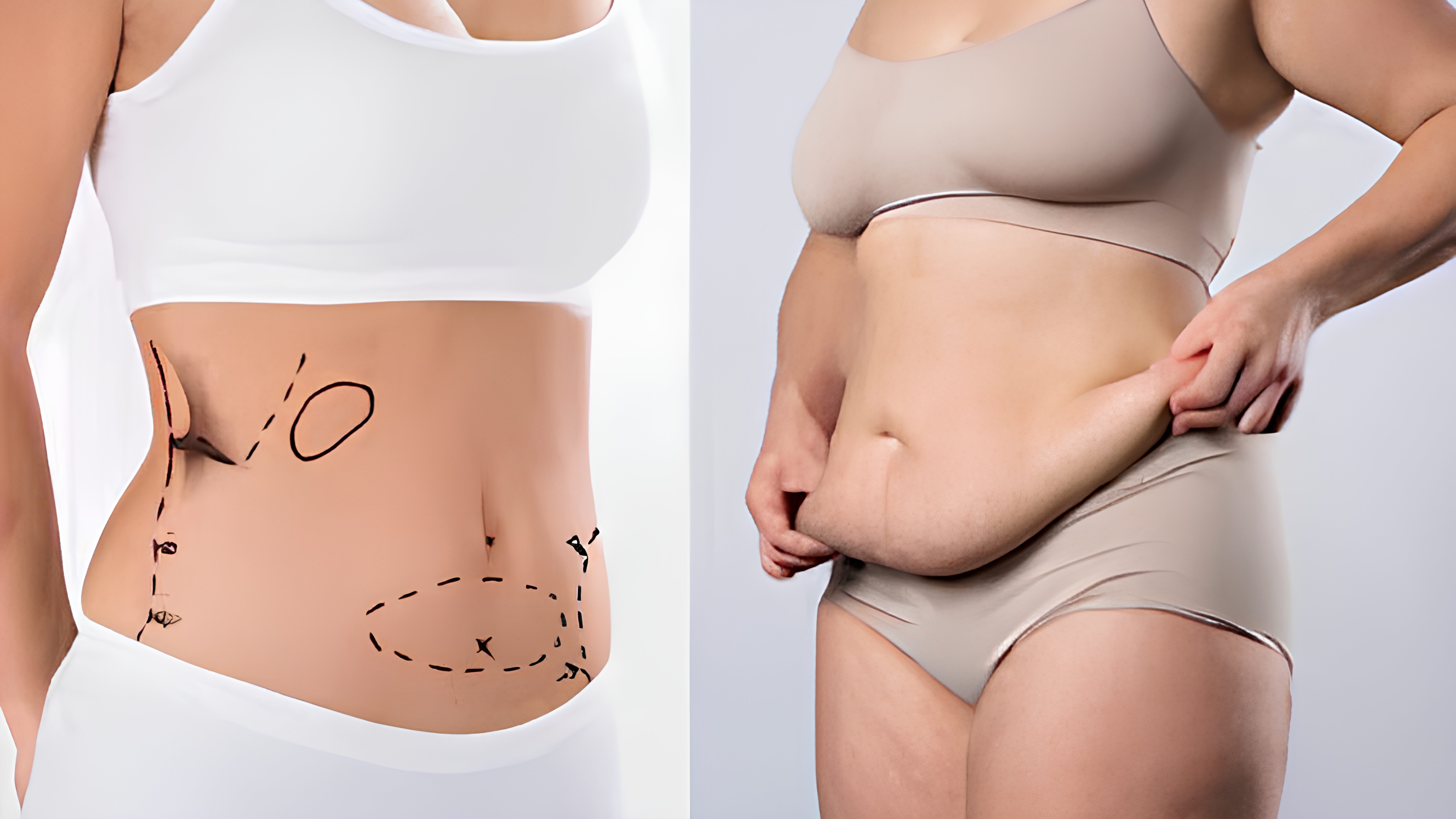
What is Tummy Tuck? Abdominoplasty, a tummy tuck, is an aesthetic surgical surgery used to enhance the physical appearance and Read more
Discover the Skin Tightening Treatment Option for You
Maintaining smooth, supple skin on your face and body might become more difficult as you age, even with proactive regular Read more
Add a Comment