


3d rhinoplasty imaging helps patients with clear goals and realistic expectations visualize potential outcomes before surgery. The technology works best for those seeking refinement rather than transformation, making the consultation a collaborative planning session.
3D Rhinoplasty Imaging: Who Gets the Best Results
You have spent months — maybe years — studying your profile in photos, noticing the bump that catches the light, the tip that feels too wide, the bridge that doesn’t quite suit your face. You have saved before-and-after images, read recovery timelines, and researched surgeons. Now you are standing at the threshold of a decision, and you want to know: will 3d rhinoplasty imaging actually show you what is possible, or will it just show you a pretty picture?
The answer depends less on the technology and more on you. The patients who walk away from 3D simulation feeling confident, informed, and excited about their surgery share specific characteristics. They understand what the technology can and cannot do. They arrive with the right mindset. And they choose clinics where the imaging serves the surgical plan — not the other way around.
Let us walk through exactly who gets the most value from this process, why candidate selection matters more than the software itself, and how to position yourself for the best possible consultation experience.
Why 3D Rhinoplasty Imaging Changes the Consultation Dynamic
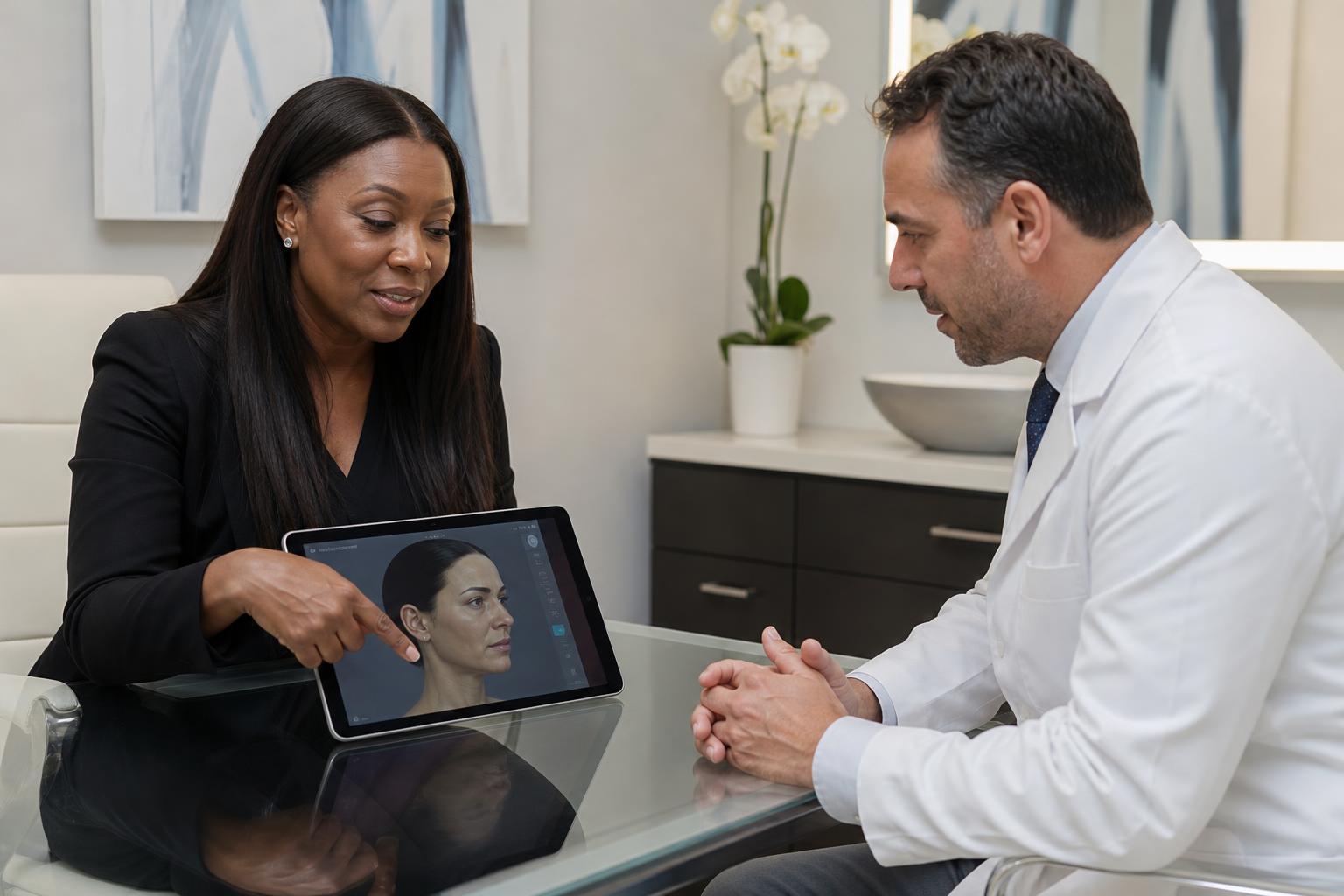
Traditional consultations relied on two-dimensional photos, hand-drawn sketches, and verbal descriptions. Patients nodded along while surgeons described “reducing the dorsal hump” or “refining the nasal tip,” each person holding a slightly different mental image of the result. Misalignment was common. Disappointment followed.
3d rhinoplasty imaging replaces ambiguity with a shared visual language. You rotate a model of your own nose on screen. You see the profile, the frontal view, the three-quarter angle. You watch the bridge lower, the tip rotate, the nostrils narrow — all in real time, guided by a surgeon who understands the anatomical limits of each adjustment.
But the technology does not operate in a vacuum. Its value emerges from the conversation it enables. The patients who benefit most are those who use the simulation as a communication tool, not a crystal ball.
The Shift from Passive to Active Participation
When you sit in front of a 3D simulation, you are not watching a presentation. You are co-designing a surgical plan. The surgeon makes an adjustment; you react. You suggest a change; the surgeon explains what is anatomically feasible. This back-and-forth builds a shared understanding that no brochure or website can provide.
Patients who engage actively — asking “what happens if we go slightly more conservative here?” or “can we see how this looks from below?” — consistently report higher satisfaction with both the consultation and the final outcome. They are not hoping for the best. They are helping define what “best” means for their face.
Key Takeaway: 3D imaging transforms you from a passive recipient into an active participant. The more you engage with the simulation, the more precise your surgical plan becomes.
Who Is the Ideal Candidate for 3D Nose Simulation?
Not every patient extracts equal value from 3d nose simulation. The technology excels at specific types of changes and struggles with others. Understanding where you fall on this spectrum determines whether the experience clarifies your path or complicates it.
Patients Seeking Refinement Over Transformation
3D imaging shines when the goal is harmony — bringing the nose into better proportion with the chin, the forehead, the cheeks. It handles subtle adjustments beautifully: shaving a dorsal hump by two millimeters, rotating the tip three degrees, narrowing the alar base just enough to balance the facial thirds.
Patients who want to look like themselves — only more balanced — are the sweet spot. The simulation shows them a version of their own face they recognize, refined. This builds trust. It reduces anxiety. It makes the decision to proceed feel like a natural next step rather than a leap of faith.
Patients With Specific Structural Concerns
Do you know exactly what bothers you? A wide bridge? A drooping tip? Asymmetric nostrils? A profile that feels too strong or too weak? Patients who can articulate their concerns in anatomical terms — or who can point to the screen and say “this, right here” — get exponentially more from the session.
Vague dissatisfaction (“I just don’t like my nose”) is harder to simulate productively. The technology needs a target. Surgeons need a problem to solve. When you arrive with clarity, the consultation becomes a strategy session instead of an exploration.
Patients With Realistic Expectations About Technology Limits
This is the single biggest differentiator. 3D simulation shows skin draped over a modified framework. It does not show healing. It does not show scar tissue maturation. It does not show how your specific skin thickness will behave over the new structure at six months, one year, five years.
Patients who understand this distinction use the simulation as a directional guide. They know the final result will be a conversation between surgical technique and their body’s healing response. They do not treat the image as a contract. They treat it as a compass.
Patients Open to Surgeon Guidance
The simulation allows you to “try on” changes that might not serve your face. A skilled surgeon will gently steer you away from over-rotation, over-reduction, or changes that compromise breathing. Patients who listen — who trust that the surgeon’s anatomical knowledge complements their aesthetic vision — end up with results that age beautifully.
Patients who insist on changes the surgeon advises against often request revision surgery later. The consultation is your chance to benefit from thousands of cases’ worth of pattern recognition. The simulation makes that expertise visible.
Key Takeaway: Ideal candidates seek refinement, know their concerns, respect technology limits, and value surgeon expertise. The simulation amplifies these qualities — it does not create them.
How 3D Rhinoplasty Imaging Identifies Surgical Success Factors
Beyond visualization, 3d rhinoplasty imaging serves a diagnostic function that many patients overlook. The process of building the simulation reveals critical information about your anatomy, your skin envelope, and the surgical approach required.
Skin Thickness and Soft Tissue Envelope Analysis
Thick skin drapes differently than thin skin. It conceals structural changes. It heals with more swelling. It may require different grafting strategies. During 3D imaging, the surgeon assesses your soft tissue envelope in three dimensions — not just from photos, but by correlating the digital model with physical examination.
This assessment directly shapes the surgical plan. A patient with thick skin seeking dramatic tip definition may need cartilage grafting, tip suturing techniques, or a staged approach. The simulation shows the theoretical result; the surgeon’s analysis determines the practical path to get there.
Structural Integrity and Breathing Function
A nose that looks beautiful but obstructs airflow is a failed outcome. 3D imaging allows the surgeon to model internal changes alongside external ones. Septal deviation, valve collapse, turbinate hypertrophy — these can be evaluated in the context of the aesthetic plan.
Patients who prioritize breathing alongside appearance often discover that the same structural grafts supporting the new shape also open the airway. The simulation becomes a functional planning tool, not just an aesthetic one.
Asymmetry Mapping and Correction Strategy
Facial asymmetry is universal. Nasal asymmetry is common. 3D imaging quantifies what the eye perceives intuitively. The surgeon can measure deviation angles, compare left and right landmarks, and plan corrections that address the foundation — not just the surface.
Patients with known asymmetry benefit enormously from this precision. They see exactly what “straight” means for their anatomy. They understand why certain grafts go on one side and not the other. The mystery of “why does my nose lean?” becomes a solvable equation.
Revision Surgery Complexity Assessment
For patients considering revision rhinoplasty, 3D imaging is indispensable. Scar tissue, depleted cartilage, altered landmarks — these create a landscape fundamentally different from a virgin nose. The simulation helps the surgeon map remaining resources: where is usable cartilage? Where is the scar contracture? What structural support remains?
This mapping determines whether the revision can proceed in one stage or requires a staged approach with rib cartilage harvest. It sets honest expectations. It prevents surprises in the operating room. For revision patients, the imaging is not a luxury — it is a necessity.
Key Takeaway: 3D imaging reveals anatomical realities that dictate surgical strategy. The best candidates use this insight to understand not just what will change, but how and why.
TL;DR — Who Gets the Best Results from 3D Imaging?
- Patients seeking refinement, not reinvention
- Patients who can articulate specific concerns
- Patients who understand simulation ≠ guarantee
- Patients who value surgeon guidance over personal preference
- Patients with thick skin, asymmetry, or revision needs who need detailed planning
Preparing for Your 3D Rhinoplasty Consultation
The consultation is a two-hour conversation compressed into a pivotal window. How you prepare determines what you extract from it. Patients who treat preparation as part of the process — not a chore — consistently have more productive sessions.
Bring Reference Images That Teach, Not Demand
Photos of other people’s noses can be helpful — but only if you use them to communicate aesthetic principles, not to request a transplant. “I like how this tip has soft definition without looking pinched” teaches your surgeon something. “I want this exact nose” does not.
Curate a small collection (three to five images) that illustrate the qualities you value: straightness, tip projection, nostril shape, profile balance. Be ready to explain what you like about each. Be equally ready to hear why certain features may not suit your facial proportions.
Document Your Functional Concerns
Do you have trouble breathing through one side? Do allergies cause congestion? Have you had previous nasal trauma? Do you snore? These details change the surgical plan. Write them down before the consultation. In the moment, it is easy to forget the functional history when focusing on aesthetics.
Define Your “Why” Clearly
Are you doing this for yourself? For photos? For a partner? For a career? There is no wrong answer, but the clarity matters. Patients with internal motivation — “I want to feel aligned with my reflection” — tend to navigate recovery with more resilience than those driven by external validation.
Your surgeon is not a therapist, but understanding your motivation helps them gauge your emotional readiness and set appropriate support expectations for the postoperative period.
Prepare Questions That Go Beyond the Image
The simulation will answer “what might it look like?” You need to ask the questions it cannot answer:
- What is the expected recovery timeline for my specific anatomy?
- How does my skin thickness affect the refinement I can expect?
- What grafting materials do you recommend and why?
- How do you manage swelling in the tip region long-term?
- What does the follow-up schedule look like for international patients?
These questions reveal the surgeon’s depth, their communication style, and their commitment to your entire journey — not just the operating room.
Key Takeaway: Preparation transforms the consultation from a sales pitch into a strategy session. The best candidates arrive with organized thoughts, realistic references, and questions that probe the full journey.
Why the Right Clinic Partnership Amplifies 3D Imaging Value
The software is available globally. The expertise interpreting it is not. Rhinoplasty patient selection — the surgeon’s ability to identify who will benefit, who needs caution, and who should wait — develops only through volume, mentorship, and long-term outcome tracking.
Surgeon Experience With the Technology Itself
3D imaging has a learning curve. Surgeons who have integrated it into hundreds of consultations use it differently than those treating it as a checkbox. They know which angles matter for your specific anatomy. They know when to simulate conservatively versus aggressively. They know how to explain the gap between screen and reality in terms you can internalize.
This fluency turns a demo into a dialogue. You feel it within minutes — the surgeon is not learning the tool on your time. They are using it to understand you.
Integration With the Full Surgical Workflow
At leading clinics, the 3D model does not live only in the consultation room. It informs the operative plan. It guides graft sizing. It communicates with the anesthesiology team about airway considerations. It becomes a reference point for postoperative follow-up — comparing the healing nose to the planned trajectory.
This continuity is rare. It requires systems, not just software. When you choose a clinic where imaging feeds the entire care pathway, you are not buying a preview. You are buying a plan that holds together from first click to final follow-up.
International Patient Coordination That Respects the Process
Traveling for surgery adds layers: visa timing, accommodation, recovery away from home, remote follow-up. Clinics experienced in rhinoplasty consultation turkey pathways build these logistics into the surgical plan, not around it.
Your 3D simulation session may happen virtually before you travel, or in person during a pre-operative visit. Either way, the clinic’s coordination team ensures the imaging informs your scheduling, your recovery housing needs, and your postoperative care timeline. The technology serves the patient journey — not the clinic’s marketing.
Key Takeaway: The clinic’s integration of 3D imaging into surgical planning, operative execution, and long-term follow-up matters more than the brand of software they use. Choose the system, not the screen.
From Simulation to Surgery: What Happens Next
You have completed your 3D consultation. You have a shared vision with your surgeon. You understand the plan, the risks, the recovery, the timeline. Now what?
The simulation file becomes part of your surgical record. The surgeon reviews it during preoperative marking. The operating room team may reference key landmarks. You receive a copy for your records — a visual contract between your goals and the surgical strategy.
Between consultation and surgery, you may have questions. The best clinics maintain communication channels for exactly this. You are not left wondering. You are supported through the mental preparation that precedes physical transformation.
On surgery day, the plan executes. The grafts are carved to the dimensions discussed. The sutures are placed at the angles modeled. The splint is molded to protect the new structure. The simulation did not guarantee the result — but it made the result reproducible, intentional, and shared.
Recovery unfolds. Swelling peaks and subsides. The tip refines month by month. At each follow-up — virtual or in person — you and your surgeon compare the healing nose to the simulation. Not to judge. To track. To adjust care if needed. To celebrate the milestones.
This is the full arc of 3d rhinoplasty imaging value. Not a moment in a consultation room. A thread that runs from first curiosity to final result.
Key Takeaway: 3D imaging creates a continuous thread from consultation through recovery. The best candidates choose clinics where that thread never breaks — where the simulation informs every stage of care.
Your Next Step Toward Clarity
You now understand who thrives with 3D simulation: patients who seek refinement, articulate their concerns, respect the technology’s limits, and value surgical expertise. You know how to prepare. You know what to ask. You know what to look for in a clinic partnership.
If this describes you — if you feel ready to move from wondering to planning — the next step is simple. Book a consultation where the imaging serves your questions, not a sales agenda. Where the surgeon has integrated this technology
3d rhinoplasty imaging uses advanced simulation technology to create a three-dimensional model of your nose, allowing you and your surgeon to visualize potential surgical outcomes from every angle before making any decisions. Patients with clear aesthetic goals, realistic expectations, and specific structural concerns benefit most from 3d nose simulation, as the technology excels at refining shape rather than completely transforming facial identity. No imaging technology can guarantee exact surgical outcomes, but 3d rhinoplasty imaging provides the most accurate preview available and serves as a powerful communication tool between you and your surgeon. 3d imaging transforms abstract conversations into visual collaboration, helping you articulate preferences precisely while giving your surgeon a clearer roadmap for surgical planning. Turkey’s leading clinics combine cutting-edge 3d simulation technology with surgeons who perform high volumes of rhinoplasty procedures, creating deep expertise in both the technology and the surgery itself.Frequently Asked Questions
What is 3d rhinoplasty imaging and how does it work?
Who is the ideal candidate for 3d nose simulation?
Can 3d rhinoplasty imaging guarantee my surgical results?
How does 3d imaging improve the rhinoplasty consultation process?
Why do international patients choose Turkey for 3d rhinoplasty imaging consultations?

Rhinoplasty, commonly known as a nose job, is a cosmetic surgical procedure that involves reshaping or resizing the nose. Among Read more

A Comprehensive Guide to Achieving Your Ideal Nose Understanding Rhinoplasty: Transforming Your Nose, Transforming Your Confidence Rhinoplasty, also known as Read more

Have you considered having a rhinoplasty in Turkey? If you're considering having a rhinoplasty at Clinic Wise, learn about the procedures that Read more
Add a Comment