


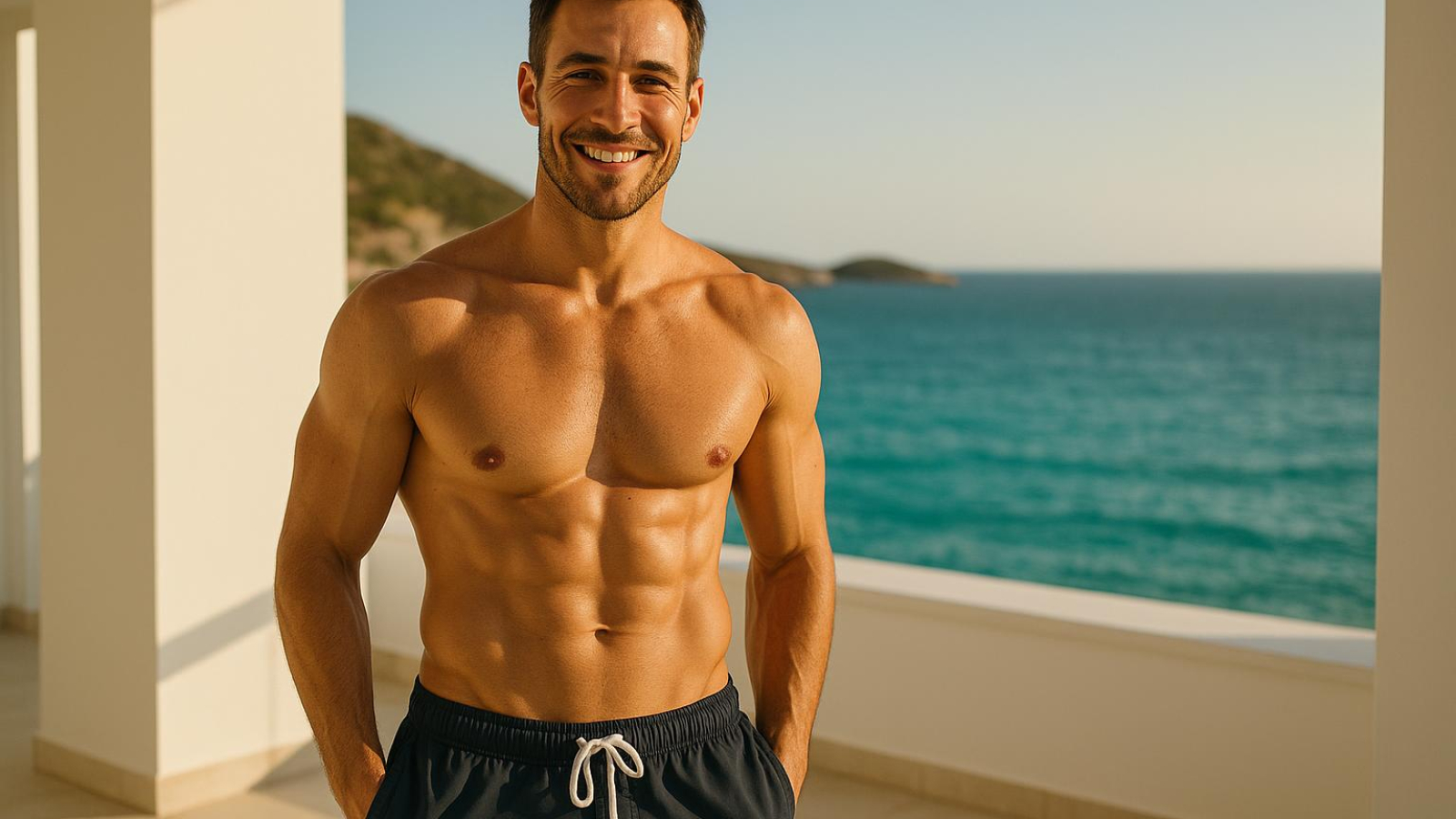
The ideal candidate gynecomastia j plasma profile includes men with glandular-dominant Grade 2-3 gynecomastia, mild-to-moderate skin laxity, stable weight, and realistic expectations. Candidate selection directly determines whether combined gland excision and Renuvion skin tightening delivers the athletic contour you want.
When you’re researching ideal candidate gynecomastia j plasma profiles, you’re not just checking boxes — you’re trying to understand if this advanced combination approach will actually give you the chest contour you’ve been working toward. The truth is, J-Plasma (also known as Renuvion) paired with gland excision isn’t for everyone. And that’s exactly why the patients who do qualify tend to get such exceptional results.
At Clinic Wise, we’ve guided hundreds of men through this decision. The pattern is clear: the right candidate walks away with a flatter, tighter, more masculine chest that looks natural in any setting — beach, gym, or boardroom. The wrong candidate? They end up needing revision surgery or settling for less-than-ideal outcomes. Let’s break down exactly who thrives with this approach and why.
What Makes Someone an Ideal Candidate for Gynecomastia J-Plasma?
The ideal candidate gynecomastia j plasma profile centers on a specific anatomical reality: you have genuine glandular tissue that needs surgical removal, but your skin has enough elasticity to retract beautifully with a little thermal encouragement. This is the sweet spot where combined gland excision and skin tightening shines.
Glandular-Dominant Tissue Composition
True gynecomastia involves firm, rubbery glandular tissue concentrated beneath the nipple-areola complex. It doesn’t respond to diet or exercise. If your chest fullness is primarily soft, diffuse fat (pseudogynecomastia), liposuction alone often suffices. But when palpable glandular discs are present — especially if they’re tender or asymmetrical — surgical excision becomes necessary. J-Plasma then addresses the skin envelope that remains.
Mild to Moderate Skin Laxity (Grades 2-3)
Gynecomastia grades treatment options align closely with skin quality. Grade 1 (minor enlargement, no skin excess) rarely needs skin tightening. Grade 4 (severe enlargement with significant skin redundancy and ptosis) typically requires formal skin excision with longer scars. The male breast reduction ideal candidate for J-Plasma sits in Grades 2 and 3: visible glandular enlargement with skin that drapes but hasn’t lost all recoil capacity.
Stable Weight and Healthy Lifestyle
Weight fluctuations after surgery can stretch the newly tightened skin envelope. The best candidates have maintained a stable weight for at least six months and commit to maintaining it. This isn’t about being “fit” — it’s about consistency. A slightly higher but stable BMI often yields better long-term results than a lower BMI achieved through crash dieting.
Non-Smoker or Willing to Quit
Nicotine constricts blood vessels and impairs the collagen remodeling that makes J-Plasma work. Most surgeons require at least four weeks nicotine-free before and after surgery. This includes vaping, patches, and gum. It’s a non-negotiable for optimal healing.
Realistic Expectations and Emotional Readiness
Perhaps the most overlooked criterion: you understand what “improvement” looks like versus “perfection.” The ideal candidate wants a natural, masculine contour — not a bodybuilder’s chest if their frame doesn’t support it. They’ve researched renuvion gynecomastia results thoroughly and understand the timeline: immediate swelling, gradual tightening over months, final contour at 6-12 months.
Key Takeaway: The ideal candidate has glandular-dominant Grade 2-3 gynecomastia, stable weight, good skin elasticity, and realistic expectations. J-Plasma enhances excision results — it doesn’t replace the need for proper patient selection.
Understanding Gynecomastia Grades and Treatment Options

Not all gynecomastia is created equal, and treating it like a single condition leads to poor surgical planning. The grading system exists because each grade demands a different surgical strategy.
Grade 1: Minor Enlargement, No Skin Excess
- Small glandular disc beneath areola
- Skin retracts fully on its own
- Treatment: Gland excision alone (often periareolar)
- J-Plasma rarely needed
Grade 2a: Moderate Enlargement, Minimal Skin Laxity
- Visible chest fullness extending beyond areola
- Skin tone still good
- Treatment: Gland excision + liposuction feathering
- J-Plasma optional for optimal retraction
Grade 2b: Moderate Enlargement, Mild Skin Laxity
- Similar volume to 2a but skin shows early redundancy
- Nipple may sit slightly lower on chest wall
- Treatment: Gland excision + J-Plasma skin tightening
- This is a prime ideal candidate gynecomastia j plasma scenario
Grade 3: Marked Enlargement, Moderate Skin Excess
- Significant glandular and fatty component
- Definite skin redundancy, nipple below ideal position
- Treatment: Gland excision + liposuction + J-Plasma
- May need periareolar skin excision if laxity more advanced
Grade 4: Severe Enlargement, Significant Skin Excess and Ptosis
- Feminine breast contour with nipple well below inframammary fold
- Skin has lost elastic recoil
- Treatment: Formal skin excision patterns (vertical, horizontal, or anchor scars)
- J-Plasma alone insufficient — skin must be physically removed
Understanding where you fall determines whether combined gynecomastia procedures with J-Plasma will serve you or whether a different approach is warranted. This is why the initial assessment matters so much.
Key Takeaway: Grade 2b and 3 patients benefit most from adding J-Plasma to gland excision. Grade 1 rarely needs it; Grade 4 usually needs formal skin excision instead.
TL;DR — Ideal Candidate Checklist:
- Glandular tissue confirmed (not just fat)
- Grade 2b or 3 gynecomastia
- Mild-to-moderate skin laxity with residual elasticity
- Stable weight for 6+ months
- Non-smoker or committed to quitting
- Realistic about timeline and outcomes
- Good general health for anaesthesia
Why the Right Candidate Matters for Combined Gland Excision and Skin Tightening
You might wonder: if J-Plasma tightens skin, why doesn’t everyone get it? The answer lies in how thermal energy interacts with different tissue qualities — and why candidate selection is the single biggest predictor of satisfaction.
The Physics of Skin Contraction
J-Plasma delivers helium plasma energy beneath the skin, creating controlled thermal contraction of collagen fibers and stimulating neocollagenesis over months. But this only works if your skin has viable collagen architecture to respond. Skin that’s been stretched beyond its elastic limit (Grade 4) has damaged elastin fibers that won’t reliably contract, no matter the energy applied. Applying J-Plasma to such skin creates false hope and uneven results.
Matching Energy to Anatomy
The surgeon adjusts power settings, pass density, and treatment depth based on your skin thickness, subcutaneous fat layer, and glandular resection volume. A Grade 2b patient with thick, elastic skin tolerates different parameters than a Grade 3 patient with thinner skin after large gland removal. The ideal candidate gynecomastia j plasma profile allows the surgeon to work in the therapeutic window where contraction is predictable and complications are minimal.
Avoiding the “Empty Envelope” Problem
When large glands are removed from loose skin without tightening, you get a deflated appearance — the dreaded “empty envelope.” Conversely, tightening skin that has no underlying volume to support creates contour irregularities. The right candidate has the Goldilocks balance: enough glandular volume to create projection after excision, and enough skin quality to shrink-wrap the new contour smoothly.
Asymmetry Correction Potential
Most men have some chest asymmetry. J-Plasma allows selective tightening — more energy on the laxer side, less on the tighter side. But this only works when both sides fall within the treatable range. If one side is Grade 2b and the other Grade 4, no energy adjustment bridges that gap. The ideal candidate has relatively symmetrical skin quality, even if glandular volume differs.
Key Takeaway: Candidate selection isn’t gatekeeping — it’s physics. J-Plasma works within biological limits. The right anatomy + the right energy = predictable contraction. The wrong anatomy + any energy = unpredictable results.
J-Plasma Gynecomastia Recovery: What Ideal Candidates Can Expect
Recovery isn’t a passive waiting period — it’s an active phase where your candidacy traits (stable weight, non-smoking, good health) directly influence your outcome. Here’s what the journey looks like for well-selected patients.
Week 1: Protection and Patience
You’ll wear a compression garment 23 hours daily. Expect moderate swelling, bruising across the chest and sometimes lateral abdomen, and a tight sensation as the skin adheres to the new contour. Pain is typically well-managed with prescribed medication. Sleep slightly elevated. Walk gently several times daily to prevent clots.
Weeks 2-3: Early Contour Emerges
Swelling peaks around day 3-5 then gradually subsides. You’ll start seeing the excision result — flatter chest, reduced projection. The skin may feel numb or hypersensitive; both are normal as nerves recover. Compression continues. Light daily activities resume. No upper body exertion.
Weeks 4-6: The Tightening Accelerates
This is where j plasma gynecomastia recovery gets exciting. Collagen remodeling kicks in. The chest feels firmer each week. Nipple sensation begins returning (often with temporary hypersensitivity). Compression garment transitions to daytime only. Lower body exercise and light cardio usually cleared.
Months 2-3: Refinement Phase
Contour continues improving as neocollagenesis peaks. Scars at the periareolar incision and J-Plasma entry points mature from pink to pale. Most patients return to full training, including chest exercises, though heavy pressing may wait until month 3-4.
Months 4-12: Final Result
The skin continues subtle tightening. Final contour settles. Scars fade significantly. This is when patients typically report the “aha” moment — seeing themselves shirtless and recognizing the chest they envisioned.
Throughout recovery, the gynecomastia skin tightening candidates who do best are those who follow protocol religiously: garment compliance, gradual activity progression, scar care, and patience with the timeline.
Key Takeaway: Recovery is a 12-month process with visible milestones. Ideal candidates trust the timeline and comply with compression and activity guidelines — their biology does the rest.
How Clinic Wise Assesses Your Candidacy
You don’t have to self-diagnose your grade or guess your skin quality. That’s what the consultation process is for — and at Clinic Wise, it’s thorough by design.
Virtual Assessment First
Before you travel, our surgical team reviews your photos, medical history, and goals. We’re looking for the anatomical markers discussed above: glandular prominence, skin redundancy degree, nipple position relative to the inframammary fold, and asymmetry patterns. This isn’t a sales call — it’s a genuine suitability screen. If J-Plasma isn’t right for you, we’ll say so and explain why.
In-Person 3D Imaging and Palpation
On arrival, you’ll have a comprehensive physical exam with 3D chest imaging. The surgeon palpates glandular versus fatty tissue, assesses skin turgor with pinch testing, measures nipple-to-sternal-notch and nipple-to-inframammary-fold distances, and evaluates chest wall architecture. This data drives the surgical plan: excision volume, J-Plasma parameters, incision strategy, and whether any skin excision is needed.
Honest Conversation About Alternatives
Sometimes the best service is explaining why a popular procedure isn’t your best option. If your skin laxity exceeds J-Plasma’s reliable range, we’ll walk you through formal excision patterns — showing real patient examples of those results too. If you’re predominantly fatty tissue, we’ll discuss high-definition liposuction. You leave with clarity, not pressure.
Your Surgeon, Your Procedure, Your Follow-Up
The surgeon who assesses you performs your surgery and manages your recovery. No handoffs. No rotating teams. This continuity means the surgical plan you agreed to is the plan executed — with real-time intraoperative adjustments based on tissue behavior that only your assessing surgeon fully understands.
Key Takeaway: Candidacy assessment at Clinic Wise combines virtual screening, 3D imaging, physical palpation, and honest dialogue about alternatives. You get a plan matched to your anatomy — not a one-size-fits-all approach.
Real Patient Journeys: What the Right Candidate Experiences
Reading patient stories reveals a consistent theme: the men who did their homework on candidacy, arrived prepared, and trusted the process describe the experience as “life-changing
The ideal candidate has persistent glandular tissue with mild to moderate skin laxity, stable weight, realistic expectations, and good overall health. They typically have Grade 2 or 3 gynecomastia where skin tightening enhances the gland excision result. J-Plasma works best for mild to moderate skin laxity. For severe cases with extensive excess skin, traditional excision techniques may be more appropriate. Your surgeon will assess your grade during consultation. Most patients return to light activities within one week and resume exercise at four to six weeks. Compression garments are worn for several weeks to support skin retraction and minimise swelling. Incisions for gland excision are typically placed around the areola edge where they blend naturally. J-Plasma uses tiny entry points that heal as barely noticeable marks. Glandular tissue feels firm and rubbery beneath the nipple-areola complex, while fat is soft and diffuse. A physical examination and sometimes imaging confirms the composition for proper treatment planning.Frequently Asked Questions
Who is the ideal candidate for gynecomastia J-Plasma treatment?
Can J-Plasma treat severe gynecomastia with significant excess skin?
How long is recovery after combined gland excision and J-Plasma?
Will I have visible scars after gynecomastia J-Plasma surgery?
How do I know if I have glandular tissue versus just fat?

Male Chest Transformation After Gynecomastia Surgery How to Shape Chest after Gynecomastia Surgery? Following my gynecomastia surgery in Istanbul, which Read more

Either reduced male hormones (testosterone) or increased female hormones—which could be carried on by aging or drugs like steroids—cause the Read more

Discover key questions for gynecomastia surgery with j-plasma. Prepare for your consultation and achieve confident results with Clinic Wise in Read more
Add a Comment