



Gynecomastia surgery with J-Plasma combines precise glandular excision with Renuvion helium-plasma skin tightening to deliver permanent chest definition. The dual-action approach addresses excess tissue, stubborn fat, and skin laxity in one procedure, securing results that withstand aging and weight fluctuations when paired with healthy habits.
Gynecomastia Surgery with J-Plasma: Maximizing Long-Term Chest Contour
You have researched the condition. You understand the frustration of chest tissue that refuses to respond to training or weight loss. Now you are evaluating the surgical options that actually deliver gynecomastia long term results — not just a temporary improvement that fades as skin relaxes or residual tissue reorganizes. This is where gynecomastia surgery with j-plasma enters the conversation as a genuine evolution in male chest contouring.
The combination of meticulous surgical excision and Renuvion j-plasma skin tightening addresses the three pillars of gynecomastia in a single operative session: firm glandular tissue, stubborn adipose deposits, and the skin envelope that must redrape cleanly over the new architecture. For patients traveling to Turkey for treatment, this approach has become the benchmark at leading centers because it solves the problem that traditional liposuction alone cannot — the loose, crepey skin that often remains after volume reduction.
Key Takeaway: Gynecomastia surgery with J-Plasma is the only single-procedure solution that simultaneously removes glandular tissue, eliminates excess fat, and contracts the skin envelope for a tight, athletic contour that endures.
Why Gynecomastia Surgery with J-Plasma Changes the Long-Term Game
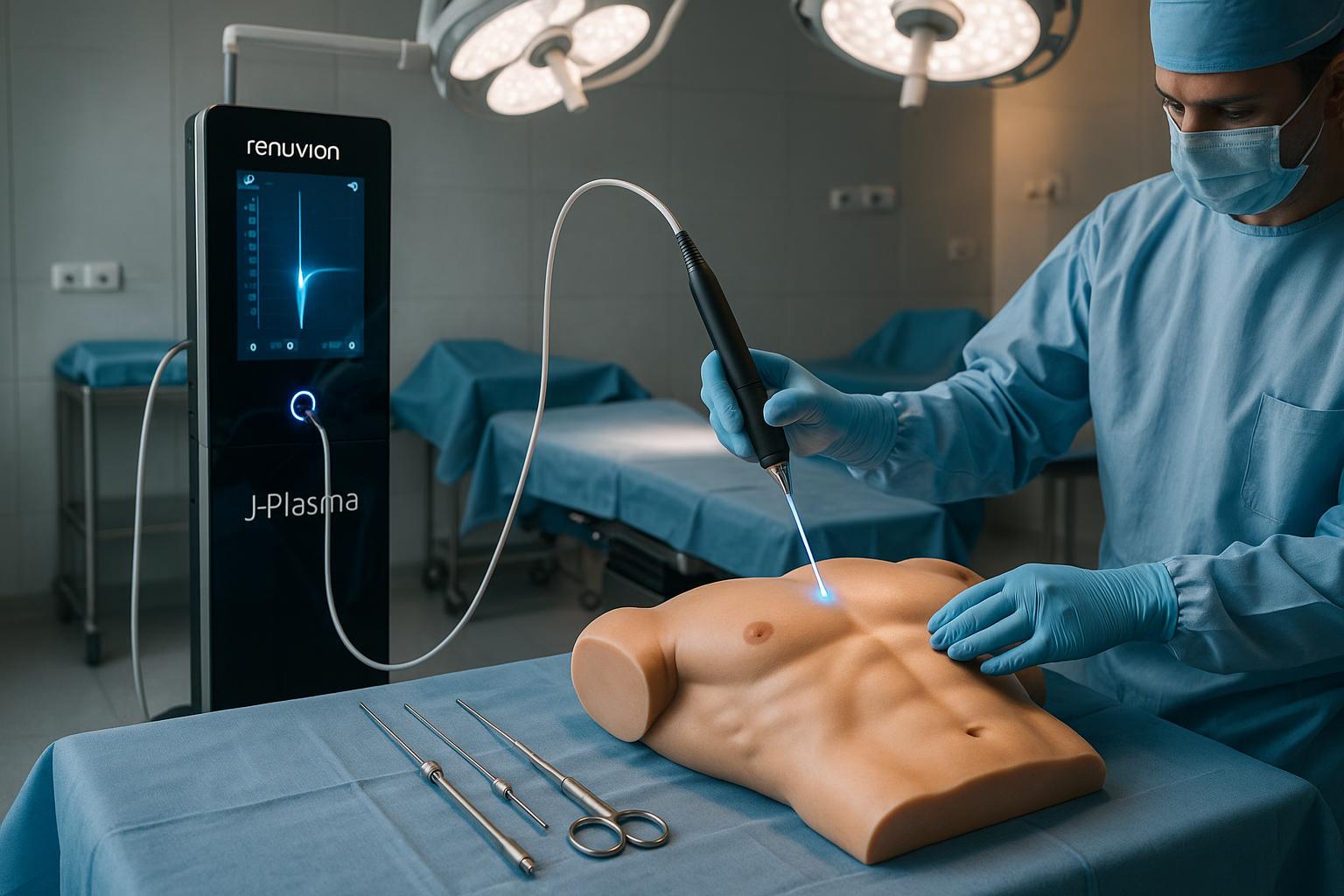
Historically, surgeons faced a dilemma. Aggressive liposuction and gland excision could leave a deflated skin envelope — particularly in older patients or those with significant volume loss. Conservative tissue removal preserved skin tone but risked incomplete correction. The introduction of Renuvion technology, which delivers helium plasma energy beneath the dermis, fundamentally altered this equation.
The helium plasma generates controlled thermal energy that causes immediate collagen contraction while stimulating neocollagenesis over the following months. This means the skin does not merely shrink-wrap; it remodels from within. For gynecomastia skin tightening, this is the difference between a result that looks surgical and one that looks like you simply always had this chest.
Patients consistently describe the moment they realize their compression garment comes off for the final time and the contour holds — no rippling, no residual fullness, no “empty sack” appearance. That confidence is the product of a protocol that respects every layer of the chest anatomy.
The Three-Component Protocol
- Glandular excision via periareolar or inframammary incision — the only way to permanently eliminate the firm, fibrous tissue that defines true gynecomastia.
- Power-assisted or VASER liposuction — sculpting the peripheral chest and axillary tail for seamless transitions into the shoulder and latissimus.
- Renuvion J-Plasma application — subdermal passes with the handpiece to induce immediate contraction and long-term collagen remodeling across the entire treatment zone.
Each step is calibrated to your specific anatomy. A Grade I presentation with minimal skin laxity may require only targeted gland removal and light plasma passes. A Grade III case with significant ptosis benefits from broader subdermal energy delivery. The surgeon’s judgment here — not a cookie-cutter template — determines whether your gynecomastia long term results hold their shape at five, ten, and twenty years.
Key Takeaway: The three-component protocol — excision, liposuction, Renuvion — is tailored intraoperatively to your grade of gynecomastia and skin quality, ensuring no layer is over- or under-treated.
Understanding the Dual-Action Approach: Excision Meets Renuvion Skin Tightening

Let us pause on the science, because understanding why it works helps you protect the investment you are making. Renuvion uses helium gas converted to plasma state by radiofrequency energy. The plasma stream exits the handpiece at a precise temperature range that triggers two simultaneous phenomena: immediate collagen fiber shortening (the “shrink-wrap” effect you see on the table) and a controlled thermal injury that activates fibroblasts to produce new collagen and elastin over the subsequent three to six months.
This secondary wave of remodeling is why patients often report their chest contour continues to sharpen well after swelling resolves. The skin literally thickens and tightens from within. For chest contouring maintenance, this biological response is your ally — provided you do not undermine it with significant weight fluctuations or smoking.
Contrast this with older energy-based devices that relied on bulk heating. Those carried higher risks of burns, contour irregularities, and inconsistent penetration. Renuvion’s helium plasma flows along tissue planes, treating the subdermal layer uniformly without damaging the skin surface or deeper structures. The safety profile has made it the preferred adjunct for surgeons who specialize in high-definition body contouring worldwide.
When Is J-Plasma Indicated?
Not every gynecomastia patient requires skin tightening. The decision matrix includes:
- Skin elasticity assessment — pinch test and visual evaluation during consultation.
- Volume of tissue to be removed — greater resection creates greater redundancy.
- Age and collagen quality — natural elasticity declines predictably decade by decade.
- Previous weight loss history — patients who have lost significant weight often have compromised dermal integrity.
Your surgical team at Clinic Wise will walk you through this analysis with clinical photography and 3D imaging where available, so the plan is transparent before you ever step into the operating theatre.
Key Takeaway: Renuvion’s helium plasma induces both immediate collagen contraction and months-long neocollagenesis, creating a self-reinforcing tightening effect that continues improving your contour long after surgery.
Your Gynecomastia Recovery Timeline: What to Expect Week by Week
A smooth recovery is not passive — it is an active partnership between you and your surgical team. Understanding the gynecomastia recovery timeline eliminates anxiety and empowers you to support each healing phase.
Days 1–3: The Acute Phase
You will wake in a compression garment that stays on 23 hours daily. Mild to moderate discomfort is managed with prescribed analgesics. Drain tubes, if placed, are typically removed before discharge or at the first follow-up. Sleep elevated at 30–45 degrees. Walk gently every two hours to promote circulation.
Days 4–14: Transition to Mobility
Swelling peaks around day three, then gradually recedes. Bruising may track toward the abdomen — this is normal. You may shower once drains are out (usually day 2–3). Desk work is feasible by day 7–10. The garment remains full-time except for hygiene.
Weeks 3–6: Remodeling Accelerates
This is where the Renuvion magic becomes visible. The initial contraction firms; now neocollagenesis thickens the dermis. You transition to garment wear 12 hours daily (typically overnight). Light cardio — walking, stationary bike — is encouraged. No pushing, pulling, or lifting above 5 kg.
Weeks 6–12: Return to Full Life
Strength training resumes progressively. The chest may feel firm or slightly numb — sensory nerves regenerate slowly. Scars enter the pink, active remodeling phase. Silicone gel or sheets optimize their final appearance. By week 12, most patients are cleared for unrestricted activity.
TL;DR Recovery Snapshot
- Week 1: Garment 23/7, light walking, desk work by day 7–10
- Weeks 2–3: Garment full-time, light cardio, swelling resolving
- Weeks 4–6: Garment 12 hrs (nights), progressive cardio, no heavy lifting
- Week 6+: Strength training returns, garment optional, scars enter remodeling
- Month 3: Unrestricted activity, final contour emerging
Key Takeaway: The first six weeks are your window to protect the surgical architecture — compression, movement, and patience let the Renuvion-induced collagen remodeling lay down its strongest framework.
Essential Gynecomastia Aftercare Tips for Lasting Definition
Surgery creates the contour; aftercare preserves it. These gynecomastia aftercare tips are the practical, daily habits that separate a good result from an exceptional one.
Compression Discipline
The garment is not optional. It minimizes seroma risk, supports the newly tightened skin envelope, and guides collagen alignment during the critical remodeling window. Wear it exactly as prescribed — typically 23/7 for two weeks, then 12/7 for four more. Keep a second garment so one is always clean.
Scar Management Protocol
Once incisions are fully epithelialized (usually week 2–3), begin silicone therapy. Gel twice daily or sheets 12 hours daily for a minimum of three months. Massage with firm, circular pressure once scars are mature (week 6+) to prevent tethering to underlying fascia. Sun protection is non-negotiable — UV exposure darkens scars permanently. SPF 50+ on the chest for a full year.
Lymphatic Support
Gentle manual lymphatic drainage (MLD) sessions starting week 2 can dramatically reduce residual edema and fibrosis risk. Two to three sessions weekly for the first month, then weekly through month three. Many patients find this the most relaxing part of recovery.
Nutrition for Collagen Synthesis
Protein intake of 1.6–2.2 g per kg body weight daily provides the amino acid substrate for neocollagenesis. Vitamin C (500–1000 mg), zinc (15–30 mg), and copper (1–2 mg) are cofactors for collagen cross-linking. Hydration — 3+ liters daily — maintains tissue perfusion.
Sleep and Stress Modulation
Cortisol degrades collagen. Prioritize 7–9 hours of quality sleep. Consider magnesium glycinate or adaptogens if stress is high. This is not wellness fluff — it is biochemical substrate management for your surgical result.
Key Takeaway: Compression, silicone, lymphatic drainage, targeted nutrition, and stress control form the five pillars of aftercare that let your Renuvion-enhanced result reach its genetic potential.
Maintaining Your Chest Contouring Results for Years to Come
The question every patient asks: “How do I keep this forever?” The answer is reassuringly straightforward. The glandular tissue removed during gynecomastia surgery with j-plasma does not grow back. The collagen remodeling induced by
When combined with stable weight maintenance and healthy lifestyle habits, the chest contouring achieved through gynecomastia surgery with J-Plasma is designed to be permanent. The excised glandular tissue does not regenerate, and the skin tightening effect from Renuvion technology provides lasting structural support. J-Plasma skin tightening is most valuable for patients with moderate skin laxity or those undergoing significant tissue removal. During consultation, your surgeon evaluates skin quality and elasticity to determine whether the added Renuvion step will enhance your long-term contour. Most patients return to desk-based work within one week. Light activity resumes at two weeks, while strenuous exercise and heavy lifting are typically cleared after four to six weeks. Compression garment wear supports optimal healing throughout the first month. Incisions are strategically placed along the lower areolar border or within natural chest creases, making them remarkably discreet once healed. The precision of the J-Plasma probe allows for minimal access points, further supporting inconspicuous scarring. Standard liposuction addresses excess fat but cannot remove firm glandular tissue or tighten loose skin. Gynecomastia surgery with J-Plasma combines direct glandular excision with Renuvion’s helium-plasma energy to contract collagen fibers, delivering comprehensive contouring that liposuction alone cannot achieve.Frequently Asked Questions
How long do results last after gynecomastia surgery with J-Plasma?
Is J-Plasma necessary for all gynecomastia cases?
What is the typical recovery timeline for this combined procedure?
Will there be visible scars after gynecomastia surgery with J-Plasma?
How does this procedure differ from standard liposuction alone?

Male Chest Transformation After Gynecomastia Surgery How to Shape Chest after Gynecomastia Surgery? Following my gynecomastia surgery in Istanbul, which Read more

Either reduced male hormones (testosterone) or increased female hormones—which could be carried on by aging or drugs like steroids—cause the Read more

Discover key questions for gynecomastia surgery with j-plasma. Prepare for your consultation and achieve confident results with Clinic Wise in Read more
Add a Comment